
Make an Offer

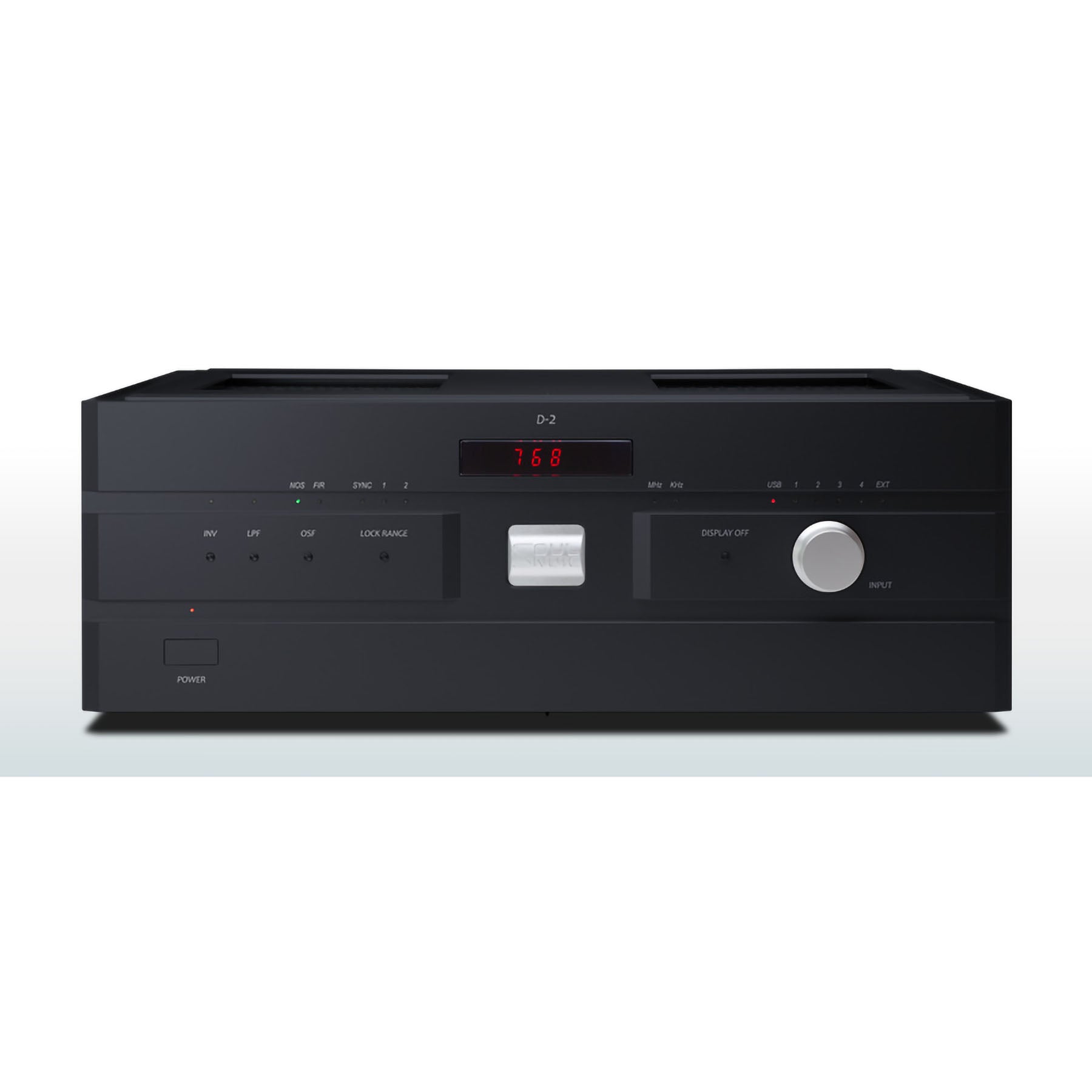
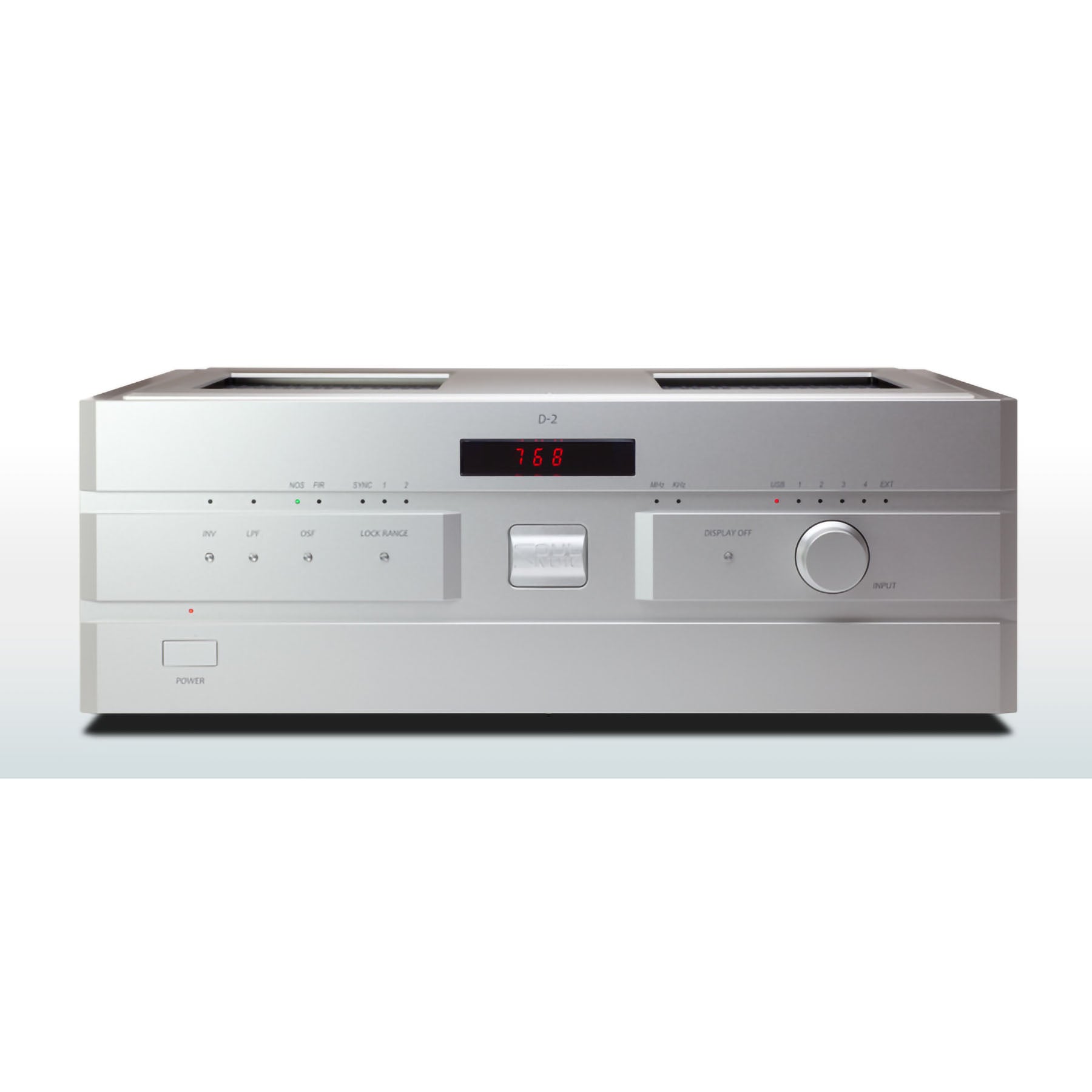
Soulnote D-2 V2 D/A Converter
Offer Submitted!
Soulnote
 Japan
Japan
Soulnote D-2 V2 D/A Converter




FREE DELIVERY AUSTRALIA WIDE
Every order ships free to any address in Australia via fully tracked, insured delivery. You’ll receive a tracking link once your order is dispatched so you can follow it the whole way. Estimated delivery is 1-4 business days.

3 Years Warranty
We handle your warranty so you don’t have to. If something isn’t right, simply get in touch and we will coordinate directly with the Australian importer on your behalf. Find out more. click here to lodge a warranty claim.

7-DAY EXPERT SUPPORT FOR YOUR PEACE OF MIND
Whether you’re browsing or already unboxing, Geoff is your friendly hi-fi guide available 7 days a week. From choosing the right system to setting up your new purchase, expert advice is always within reach. Contact Geoff today.

PRICE MATCH
Price is important, but building the right system synergy is equally so. If you’ve found a better price on one of our products or listings, simply get in touch with Geoff. Don’t let price stand in the way of working with HeyNow Hi-Fi to find the right result for your system.
Description
D-2 Ver. 2 D/A Converter
Premium Silver/Premium Black
Version 2 is a dramatic evolution based on the knowledge gained from the 3 series.

Twin mono construction with New Type-R circuit
The greatest feature of the D-2 and the key to its sound quality was its large-scale non-feedback discrete amplifier, on a par with that of a power amplifier. The D-2 Ver.2 incorporates the latest version of this amplifier circuit, the New Type-R, developed for the E-3, which has been refined for use with DACs. This achieves a twin mono construction, with the power supply and other components located on the left and right.

Texas Instruments LMX2594 DDS
For the DDS, we have adopted the PLLatinumTMRF synthesizer LMX2594 from Texas Instruments, which boasts world-class specifications of -236dBc/Hz figure of merit and 45fs jitter (femtoseconds, where a femtosecond is 1/1000 of a picosecond), for the first time in an audio DDS. This ultra-low jitter DDS enables overwhelmingly clear and profound spatial depiction, whether using a highly accurate external clock or the built-in TCXO.

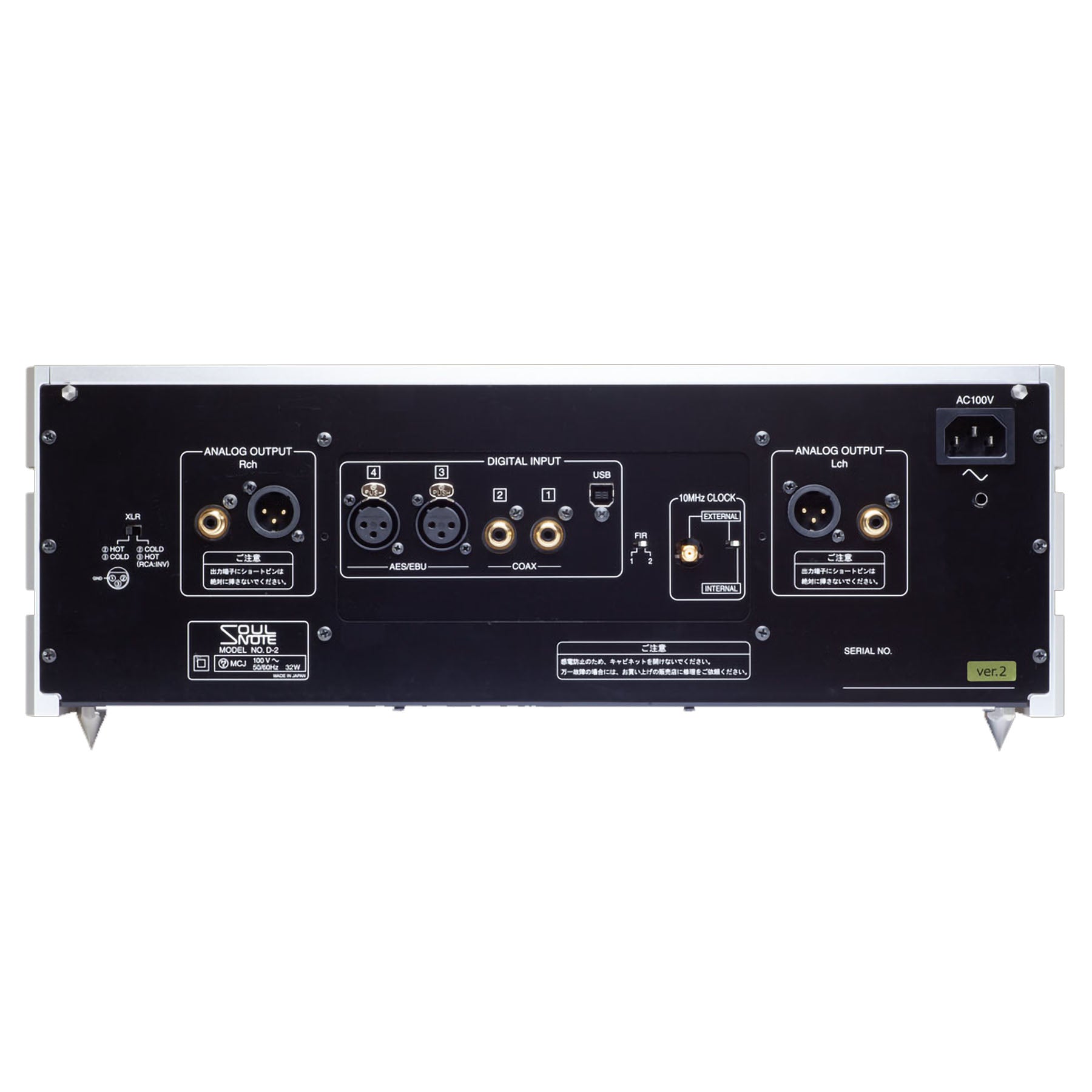
Supports 10MHz external reference clock input
The internal clock uses a high-performance TCXO boasting the highest level of close-in phase noise (-121dB at 10Hz offset). To avoid jitter caused by the IC, a high-frequency mechanical contact relay is used to switch between the internal and external clocks. When using an external clock, the internal clock is powered down to stop oscillation, eliminating mutual interference.
The external clock terminal uses a new SMA terminal with excellent high-frequency characteristics and a reinforced structure. This eliminates the need for the conversion plug previously required when connecting the X-3 clock generator. Using the X-3 dramatically improves the sound quality across the entire frequency range.


Resistor IV circuit using ES9038PRO
Two ES9038PRO amplifiers, boasting a powerful output current of 120mA, are used per channel. This allows for IV conversion using a single low-resistance resistor. This eliminates TIM distortion, a problem with feedback-type IV circuits, resulting in a completely non-feedback DA converter. The ES9038PRO also uses synchronous mode, which allows for the highest sound quality.
NOS mode adopted
In addition to the conventional FIR oversampling mode, we have also adopted the NOS (non-oversampling) mode, which can be considered a non-feedback mode in the digital domain. In this mode, the pre-echo and post-echo observed in the impulse response of FIR oversampling do not occur.

Impulse output waveform (analog output) in FIR oversampling filter
Pre-echo and post-echo are artificial "sounds" created by calculation from previous and subsequent data in order to interpolate data. This makes waveforms such as sine waves appear smoother, but the calculation algorithm can change the sound quality and add ambiguity to the time axis.

Impulse output waveform in NOS mode (analog output)
This waveform can only be achieved in combination with a non-feedback discrete amplifier that does not use analog filters. Because musical waveforms are a series of impulse waveforms of different heights, the NOS mode eliminates the ambiguity of time axis information, bringing a more realistic and natural sound quality and sense of space to the human ear, which is very sensitive to the time axis.
*DSD does not enter NOS mode.
Equipped with a 400VA bifilar-wound high-regulation toroidal transformer with 8 secondary windings
The AK4100 employs a power transformer with eight secondary windings that boasts regulation on a par with that of a high-power amplifier. Separate rectifier circuits for each stage prevent interference. Furthermore, unnecessary vibrations from the power transformer are vented to the exterior of the housing via spikes directly below the transformer.
Noise suppression without relying on filters
The D-2 uses a four-layer board with 70 micron copper foil and optimizes the artwork on the printed circuit board to eliminate noise at the source. Thorough noise suppression measures are implemented without relying on ferrite filters or other types that affect sound quality, and unwanted radiation is kept below the noise floor level in all modes.
Tech Specs
|
Input format |
USB: PCM, DSD (DoP v1.1, ASIO native) |
|
Supported sampling frequency |
USB: Max. 768kHz (PCM) / Max. 22.6MHz (DSD) |
|
PCM quantization bit rate |
USB: 16bit, 24bit, 32bit |
|
Digital input |
USB (Type B), coaxial x2 (SPDIF), AES/EBU x2 |
|
External clock input |
10MHz (BNC50 ohm) |
|
Analog output |
XLR x1, RCA x1 |
|
Analog output level |
XLR: 5,6 Vrms |
|
Frequency characteristic |
2Hz to 120kHz (+0/-1dB) |
|
S/N ratio |
110dB |
|
Total harmonic distortion |
0,008% (NOS/176,4kHz) |
|
Analog filter |
Two-dimensional passive |
|
Power voltage |
230V AC 50Hz |
|
Power consumption |
56W |
|
Maximum external dimensions |
Main unit: 430(W) × 160(H) × 405(D)mm |
|
Weight |
17kg |
|
Included accessories |
Spikes, Power Cord |
Customer Reviews
User Reviews
Industry Reviews
Warranty Information
 3 Years Warranty
We care about your experience with HeyNow Hi-Fi, and we’re here to make the warranty process as smooth as possible.
Your warranty is handled directly by the Australian importer. By submitting this form, we’ll coordinate the process for you and keep you updated every step of the way. Important: Shipping fees are not included as part of your warranty coverage.
If your HeyNow Hi-Fi purchase isn’t working as it should, click here to lodge a warranty claim.
Should you have any questions, feel free to contact us https://www.heynowhifi.com.au//pages/contact

Why Choose Soulnote
Signature Design and Sound
Soulnote Product Range
Featured Categories


WHY CHOOSE HEYNOW HI-FI?
At HeyNow Hi-Fi, it's not just about the gear - it's about how it all comes together. With over 30 years of experience, Geoff provides personalised, expert advice to help you build a system that suits your music, your space, and listening style.
Whether you're starting from scratch, refining your set up, or upgrading your gear, Geoff is always happy to have a chat. Call or book a private consultation directly with Geoff today.